-
-
-
-
-
- The Modern Dilemma in Interior Wall Design
- Understanding the Basics: HPL Panelling and Wooden Wall Panels
- What Is HPL Panelling?
- What Are Wooden Wall Panels?
- Comparison Table: HPL Panelling vs Wooden Wall Panels
- Design & Aesthetic Appeal
- Durability & Maintenance Comparison
- Installation and Cost Factors
- Environmental Sustainability
- Best Use Cases for Each Material
- Why Architects Prefer HPL Panelling from MAPL
- Conclusion: Which Is Better for You?
-
-
-
-
The Modern Dilemma in Interior Wall Design
When it comes to elevating interiors, wall panelling has become a defining element of modern design. It not only enhances the aesthetics but also adds insulation, durability, and texture to interior spaces.
Among the most popular options today are HPL panelling and wooden wall panels — both admired for their beauty and timeless appeal. But which one is truly right for your space?
As a trusted ACP and HPL sheet manufacturer in India, MAPL helps architects, builders, and homeowners make informed decisions by combining design excellence with material innovation. Let’s explore how these two materials differ in performance, cost, and design potential.
Understanding the Basics: HPL Panelling and Wooden Wall Panels
What Is HPL Panelling?
HPL (High-Pressure Laminate) panelling is a decorative surface material made by compressing layers of kraft paper and decorative sheets under high pressure and temperature. The result is a dense, durable, and water-resistant sheet perfect for wall cladding, furniture, and interior decoration.
It is widely preferred for its scratch resistance, stain resistance, and availability in multiple finishes such as wood, marble, metallic, matte, and glossy.
What Are Wooden Wall Panels?
Wooden wall panels are crafted from solid or engineered wood, often used for interiors that demand warmth and a natural aesthetic. While they bring a sense of luxury and texture to a space, they require regular maintenance and protection from moisture, termites, and fading.

Comparison Table: HPL Panelling vs Wooden Wall Panels
| Feature | HPL Panelling | Wooden Wall Panels |
|---|---|---|
| Material Composition | Resin-pressed laminate sheets | Natural or engineered wood |
| Durability | Highly durable and impact resistant | Prone to warping and cracking |
| Moisture Resistance | Excellent | Low |
| Fire Resistance | Fire-retardant options available | Flammable |
| Maintenance | Easy to clean | Requires polishing or repainting |
| Design Variety | 50+ colours, textures & finishes | Limited to natural tones |
| Cost | Affordable | Expensive |
| Eco-Friendliness | Recyclable materials | Depends on source of wood |
Both materials are visually appealing, but HPL panelling clearly offers more practicality, especially for long-term use and high-traffic areas.
Design & Aesthetic Appeal
When it comes to design flexibility, HPL panelling provides architects with endless creative freedom. It’s available in wooden, metallic, matte, glossy, and stone-inspired finishes, giving interiors a sophisticated, contemporary look.
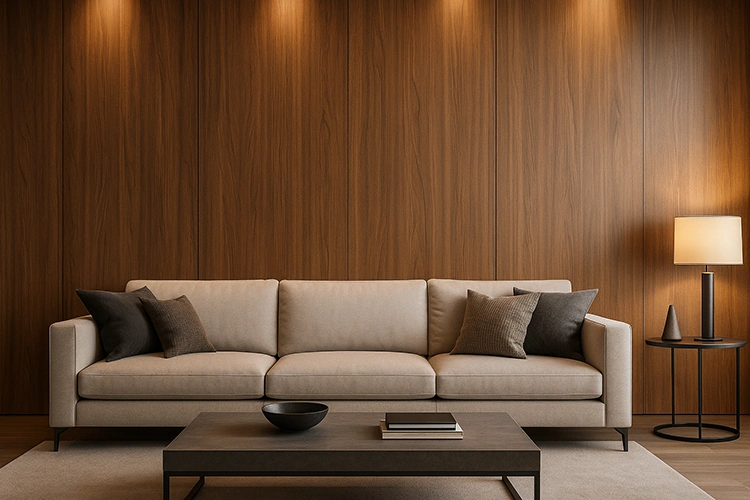
In contrast, wooden wall panels bring natural warmth and authenticity but are limited in tone and texture. Over time, even high-quality wood can lose its lustre or change colour due to exposure to sunlight and humidity.
For modern projects that demand uniformity and consistency, HPL panels are a more reliable and versatile option.
Durability & Maintenance Comparison
Durability is where HPL panelling truly shines. It’s resistant to scratches, stains, and impact, making it ideal for offices, hotels, hospitals, and homes — even in humid areas like kitchens or bathrooms.
On the other hand, wooden wall panels require regular polishing, termite protection, and sealing to maintain their appearance. They’re also prone to warping in fluctuating weather conditions.
MAPL’s HPL wall panels are UV-protected and moisture-resistant, ensuring long-term performance with minimal maintenance — perfect for Indian climate conditions.
Installation and Cost Factors
Installing HPL panelling is fast, cost-efficient, and less labour-intensive. It can be easily mounted using adhesives or mechanical fixing systems, reducing installation time significantly.
Wooden wall panels, however, require skilled carpenters, customized fittings, and more installation time. They also tend to cost more, not only upfront but in maintenance over time.
If you’re seeking premium looks without the heavy price tag, HPL panels offer the same warmth and texture of wood at a fraction of the cost.
Environmental Sustainability
Sustainability is another crucial factor in modern design. HPL panelling is made using eco-friendly resins and recycled paper, making it an environmentally conscious choice. It also eliminates the need for deforestation, unlike traditional wood.
While wooden wall panels can be eco-friendly if sourced responsibly (e.g., FSC-certified wood), their production and maintenance often have a higher carbon footprint.
At MAPL, sustainability is built into every product — from ACP sheets to HPL panels — ensuring environmentally responsible solutions for modern architecture.
Best Use Cases for Each Material
- HPL Panelling: Best for offices, hotels, hospitals, schools, and humid environments where durability matters most.
- Wooden Wall Panels: Great for luxury interiors or feature walls in living rooms, lobbies, or boardrooms where aesthetics take priority.
For architects seeking the best of both worlds, a combination of HPL panelling for high-traffic areas and wood for accent sections offers a balanced approach.

Why Architects Prefer HPL Panelling from MAPL
MAPL’s range of HPL panels is designed to meet the diverse needs of modern designers and builders. Each sheet is crafted using advanced European technology for superior surface finish, weather resistance, and dimensional stability.
- 50+ texture and colour options (wood, metallic, matte, and marble finishes)
- Fire-retardant, weatherproof, and easy-to-clean
- Sustainable and long-lasting
- PAN-India supply network for fast delivery and support
MAPL ensures every HPL panelling solution meets the highest standards of performance and style.
Conclusion: Which Is Better for You?
When choosing between HPL panelling and wooden wall panels, the right answer depends on your project priorities:
- For modern, cost-effective, and durable interiors, HPL panelling is the smarter choice.
- For classic, natural, and luxurious spaces, wooden panels add timeless charm.
However, if you’re seeking a balance of strength, style, and sustainability, MAPL HPL wall panels offer the perfect solution — blending elegance with endurance for residential and commercial spaces alike.