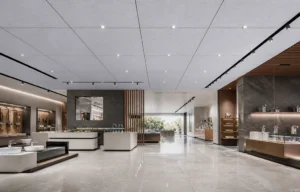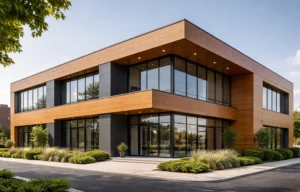
In modern construction and interior design, choosing the right material can impact the durability, safety, appearance, and total cost of your project. Two of the most commonly compared materials are ACP sheets (Aluminium Composite Panels) and Plywood. Both have been used for decades, but in recent years, architects and builders have increasingly shifted toward ACP due to its superior performance in many areas.
If you’re planning a new home, commercial building, renovation, or façade work, this detailed comparison will help you understand the strengths, weaknesses, and ideal applications of both materials — and why ACP sheets are gaining popularity across India.

-
-
-
-
-
-
-
-
- Introduction: Choosing the Right Material Matters
- What Is an ACP Sheet?
- What Is Plywood?
- ACP Sheet vs Plywood: Quick Comparison Table
- Pros & Cons of ACP Sheets
- Pros & Cons of Plywood
- Where ACP Sheet Performs Better Than Plywood
- Where Plywood Still Works Better Than ACP
- ACP Sheet vs Plywood: Cost Comparison
- Why Many Builders Prefer ACP Sheets
- Best Use Cases for Each Material
- Conclusion: Which One Should You Choose?
-
-
-
-
-
-
-
Introduction: Choosing the Right Material Matters
Whether it’s the exterior façade of a high-rise building or the interior walls of a retail store, materials play a significant role in the safety, aesthetics, and long-term durability of any project.
While Plywood has been a traditional choice for furniture and interiors, ACP sheets have emerged as a modern alternative that offers more benefits for exterior cladding, branding, and design-focused applications.
Let’s understand both materials better.
What Is an ACP Sheet?
ACP (Aluminium Composite Panel) is a multi-layered building material made from:
- Two layers of aluminium sheets
- A non-toxic core (LDPE or FR-grade core)
- A protective coating (PE, PVDF, FEVE)
This structure makes ACP sheets:
- Lightweight
- Weather-resistant
- Visually appealing
- Highly durable
They are used widely in:
- Building façades
- Exterior cladding
- Interior wall cladding
- Signage & branding
- Commercial interiors
- Furniture shutters
- Display units
ACP sheets provide a polished, modern look with long-lasting performance — especially in outdoor environments.
What Is Plywood?
Plywood is a traditional wood-based material made of multiple thin layers (veneers) glued together. It is strong, flexible, and widely used for:
- Furniture
- Kitchen cabinets
- Shelving
- Wardrobes
- Door frames
- Internal carpentry
It comes in types like MR (Moisture Resistant), BWR (Boiling Water Resistant), BWP, and Marine plywood. While plywood offers good mechanical strength, it has limitations when exposed to moisture, termites, and weather.
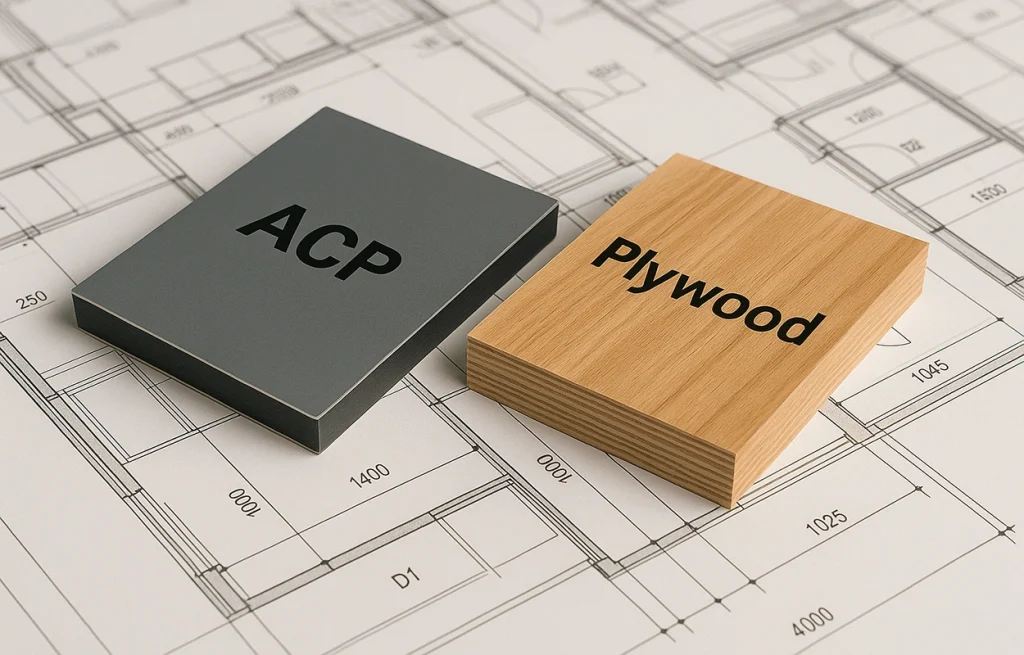
ACP Sheet vs Plywood: Quick Comparison Table
| Feature | ACP Sheet | Plywood |
|---|---|---|
| Durability | High | Medium |
| Moisture Resistance | Excellent | Moderate to Low |
| Termite Resistance | 100% | Not termite-proof |
| Weather Resistance | Excellent | Poor |
| Maintenance | Very Low | Regular polishing & care |
| Fire Safety | Available in FR-grade | Flammable |
| Lifespan | 10–20 Years | 5–10 Years |
| Aesthetics | 50+ textures & colours | Natural wood look |
| Best Use | Façades, interiors, signage | Furniture, carpentry |
This comparison clearly shows why ACP sheets are the better choice for exterior or moisture-prone environments.
Pros & Cons of ACP Sheets
Pros
- Lightweight & Easy to Install
ACP sheets are much lighter than plywood, reducing installation time and labour.
- Weatherproof & Waterproof
Ideal for exterior façades and wet areas like balconies and bathrooms.
- Termite & Fungal Resistant
Unlike plywood, ACP cannot be damaged by insects or moisture.
- Wide Range of Aesthetic Options
Available in: Wooden textures, Stone & marble finish, Metallic & brushed, Solid colours, High gloss & matte
- Low Maintenance
A simple wipe keeps the surface clean; no polishing required.
- Fire-Retardant Grades Available
Ensures safety in commercial buildings and public spaces.
Cons
- Not ideal for heavy, load-bearing furniture
- Requires proper framing for installation
- Cheap-quality ACP may fade (premium brands prevent this)
Pros & Cons of Plywood
Pros
- Strong and suitable for load-bearing furniture
- Easy to cut, shape, screw, and nail
- Natural wood-like warmth
- Good for traditional interior carpentry
Cons
- Vulnerable to moisture, leading to swelling or warping
- Prone to termite attacks unless chemically treated
- Requires laminates or polish for finishing
- Not suitable for exterior cladding
- Needs regular maintenance
Where ACP Sheet Performs Better Than Plywood
Moisture-Prone Areas
- Kitchen shutters
- Bathroom vanities
- Balconies
- Wet walls
ACP remains completely waterproof, while plywood deteriorates quickly.
Exterior Cladding
Plywood cannot withstand rain, sunlight, and humidity.
ACP is built exactly for this purpose.
Large, Seamless Surfaces
ACP sheets offer a smooth, consistent look for:
- Façades
- Office walls
- Retail branding
Fire Safety
FR-grade ACP sheets outperform plywood in fire-resistant applications.
Modern Aesthetic Requirement
ACP offers 300+ design options that plywood cannot match.

Where Plywood Still Works Better Than ACP
Though ACP is superior in many ways, plywood still has its strengths:
Load-Bearing Furniture
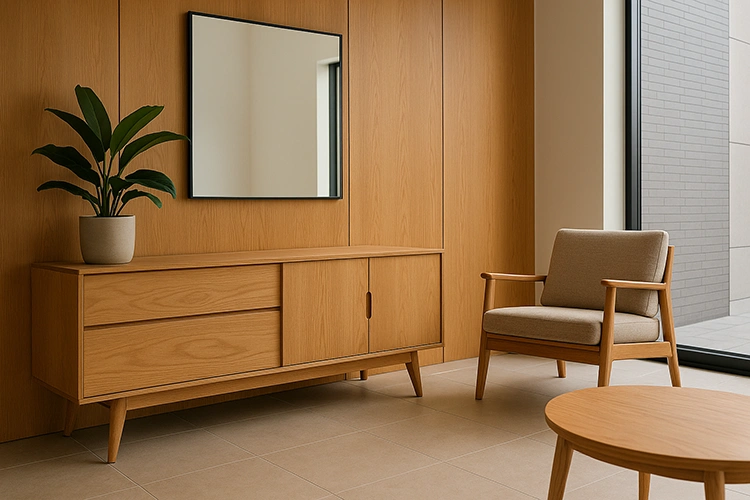
Beds, large wardrobes, bookshelves, or heavy storage units are best built with plywood.
Traditional Interior Carpentry
Plywood is easier for carpenters to nail or screw during on-site fabrication.
Natural Wood Appeal
For rustic or classic interiors, real wood textures may be preferred.
ACP Sheet vs Plywood: Cost Comparison
Cost varies depending on grade, thickness, and finish. However:
- ACP is more economical for large surface coverage
- Plywood may seem cheaper initially but requires extra costs:
Laminate
Polish
Edge banding
Maintenance
Termite treatment
ACP offers better long-term value due to lower maintenance and longer lifespan.
Why Many Builders Prefer ACP Sheets
Builders and architects across India increasingly choose ACP because:
- Faster installation = faster project completion
- Better resistance against weather & pollution
- Zero termite worries
- Lightweight material reduces structural load
- Stylish façade design options
- Long-lasting colour and surface finish
- Cost-effective for exterior and interior wall applications
ACP sheets offer a modern, durable, and efficient solution that fits today’s architectural needs.
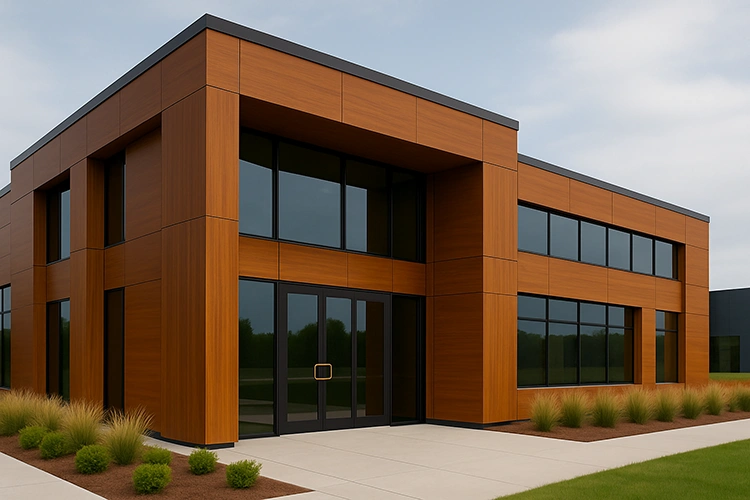
Best Use Cases for Each Material
ACP Sheets
- Exterior façades
- Commercial buildings
- Retail stores & signage
- Office interiors
- Elevation design
- Decorative wall panels
- Balcony cladding
Plywood
- Carpentry & furniture
- Shelving units
- Traditional interior design
- Door frames
- Partition structures
Conclusion: Which One Should You Choose?
There is no single “right” material — it depends on the application.
Choose ACP sheets if you need:
- Modern aesthetics
- Weather resistance
- Waterproof durability
- Façade solutions
- Low maintenance
- Termite-proof performance
Choose Plywood if you need:
- Load-bearing capability
- Heavy furniture
- On-site carpentry flexibility
For exterior use, modern interiors, offices, and branding — ACP sheets clearly outperform plywood and offer far better long-term value.