In 2026, businesses are treating the building exterior as more than just “construction”—it’s a brand asset. A well-planned commercial building elevation improves first impressions, boosts walk-ins for retail, adds credibility for offices and clinics, and reduces long-term maintenance headaches in Indian weather conditions like heat, dust, monsoon, and pollution.
This guide covers the top design and material trends shaping commercial exteriors in 2026—plus a simple checklist to apply them smartly.
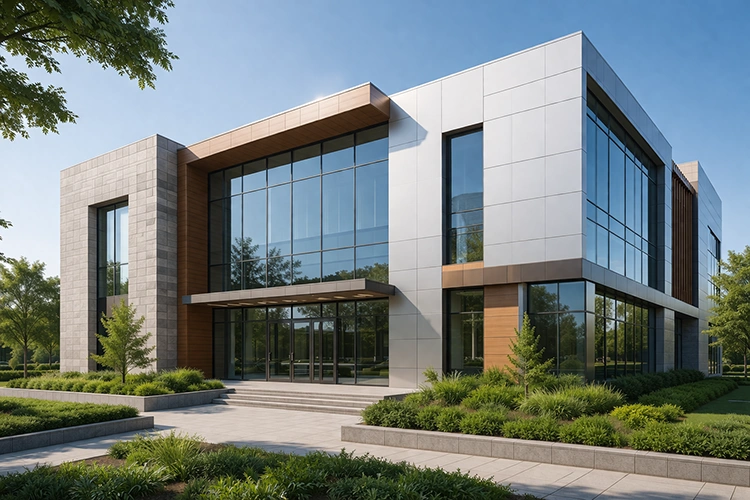
- What’s Changing in 2026?
- Trend #1: Minimalist Grids + Clean Joint Detailing
- Trend #2: Mixed-Material Facades (ACP + Glass + Stone/Wood-Look)
- Trend #3: Textured & 3D Elevation Design (Feature Zones)
- Trend #4: Bold Branding Bands + Signature Entrance Portals
- Trend #5: Earthy Neutrals + Selective Accent Colours
- Trend #6: Lighting-Integrated Facades (Night-Time Identity)
- Trend #7: Climate-Ready, Low-Maintenance Exteriors
- Trend #8: Fast Facade Retrofits for Existing Commercial Buildings
- How to Apply These Trends: Practical Checklist
- MAPL Recommendation: Where ACP Fits 2026 Elevation Trends
- Conclusion
What’s Changing in 2026?
Decision-makers now want exteriors that are:
- Premium-looking without being over-designed
- Low-maintenance (less repainting, easier cleaning)
- Fast to execute, especially for tight project timelines
- Consistent and brand-ready, so signage and lighting look better
That’s why commercial building elevation design is moving towards cleaner systems, controlled detailing, and materials that perform well over time.
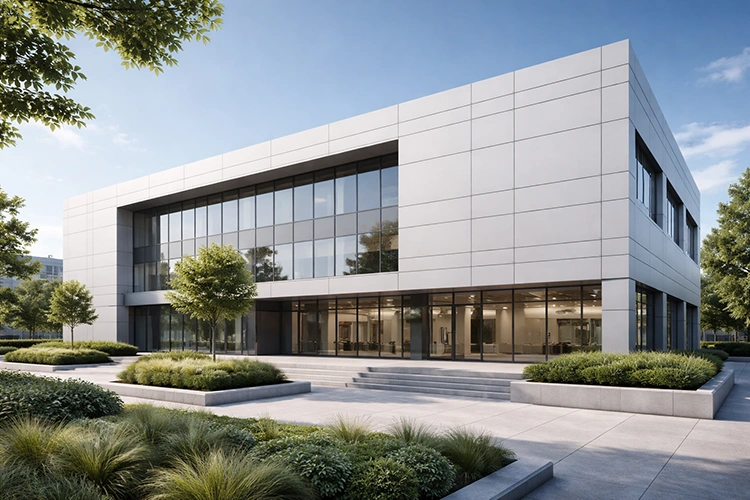
Trend #1: Minimalist Grids + Clean Joint Detailing
One of the strongest 2026 trends is simplicity done well—straight lines, balanced panel proportions, and precise joint alignment. The idea is to create a premium look through discipline, not decoration.
This approach suits corporate offices, hospitals, IT buildings, and retail showrooms because it feels modern and trustworthy. When executed correctly, even neutral shades can look luxurious—because the finishing looks intentional.
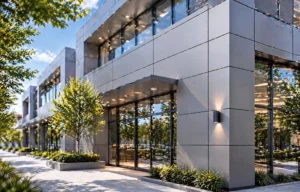
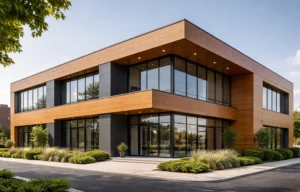
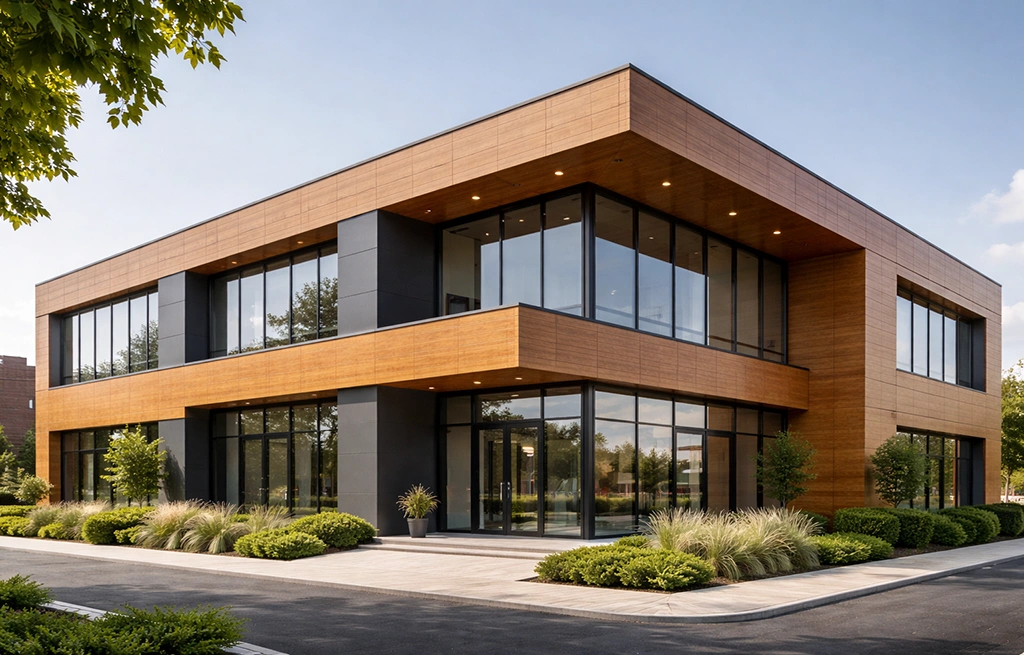
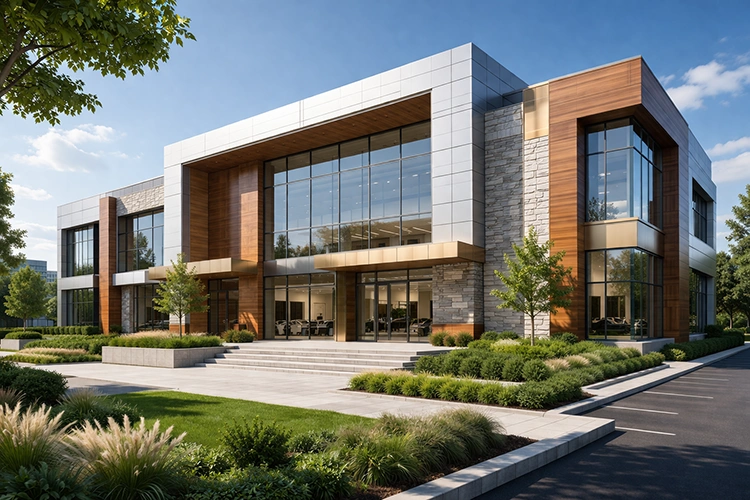
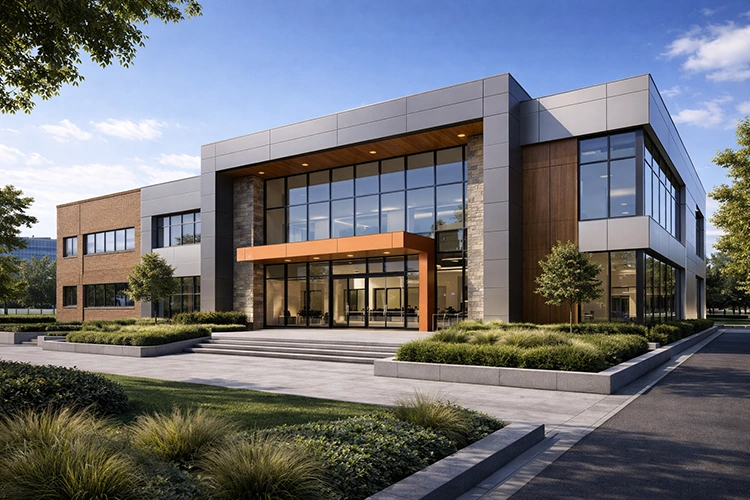
Trend #2: Mixed-Material Facades (ACP + Glass + Stone/Wood-Look)
Designers are increasingly mixing materials to build depth and contrast. You’ll often see:
- ACP as the “clean base skin”
- Glass to add openness and corporate identity
- Stone or wood-look textures for warmth and premium feel
- Metallic accents for highlight zones
This layered approach is especially popular for the facade of commercial building projects like malls, showrooms, business parks, and premium clinics—where the exterior must feel high-value but still practical.
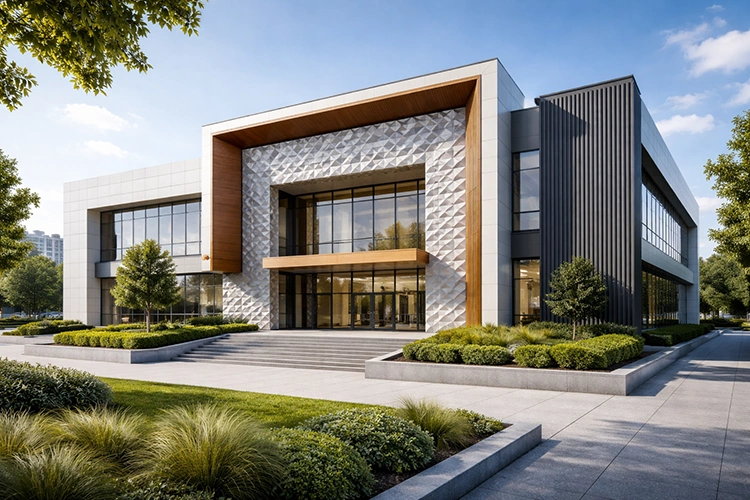
Trend #3: Textured & 3D Elevation Design (Feature Zones)
Instead of covering the entire building with heavy texture, 2026 favours feature zoning:
- A 3D pattern around the main entrance
- Fluted/ribbed textures on a corner volume
- Framed “boxes” that create shadow and depth
- A highlight band behind signage
This works brilliantly when you want an architectural commercial building elevation that stands out in a crowded marketplace, while still keeping the rest of the building clean and low maintenance.
Trend #4: Bold Branding Bands + Signature Entrance Portals
Commercial buildings are now designed with branding in mind from day one. You’ll see:
- Clear signage bands with strong contrast
- Canopy highlights that create a “main entry moment”
- Feature walls that act as a visual anchor for the business identity
This trend strongly shapes the commercial building front elevation, especially for retail outlets, corporate offices, automobile showrooms, and hospitals where visibility matters.
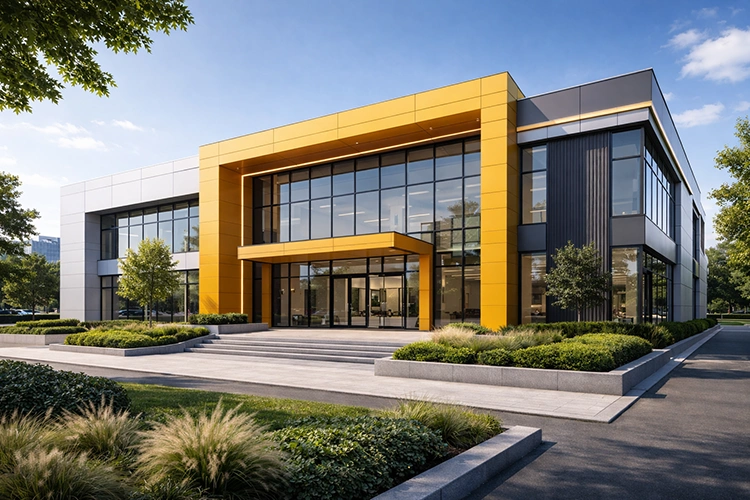
Trend #5: Earthy Neutrals + Selective Accent Colours
With dust and pollution affecting appearance, colour trends are shifting toward:
- Warm greys, sand tones, mineral shades
- Matte finishes that look premium and hide minor marks better
- Bold accents used only where needed (brand strip, entrance, signage frame)
This is becoming the signature style for modern commercial building front elevation concepts—where the building looks premium in daylight and still looks clean after weeks of normal city exposure.
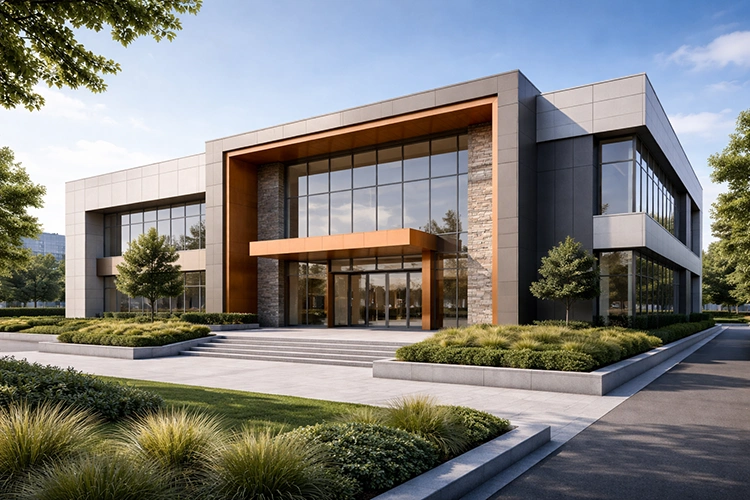
Trend #6: Lighting-Integrated Facades (Night-Time Identity)
Commercial buildings don’t just perform during the day anymore. In 2026, lighting is planned as part of the elevation:
- Linear LED lines to highlight geometry
- Soft wash lighting for premium materials
- Backlit signage zones for visibility and branding
- Controlled lighting around entrances for safety and impact
The best lighting plans enhance the design without making the façade look cluttered.
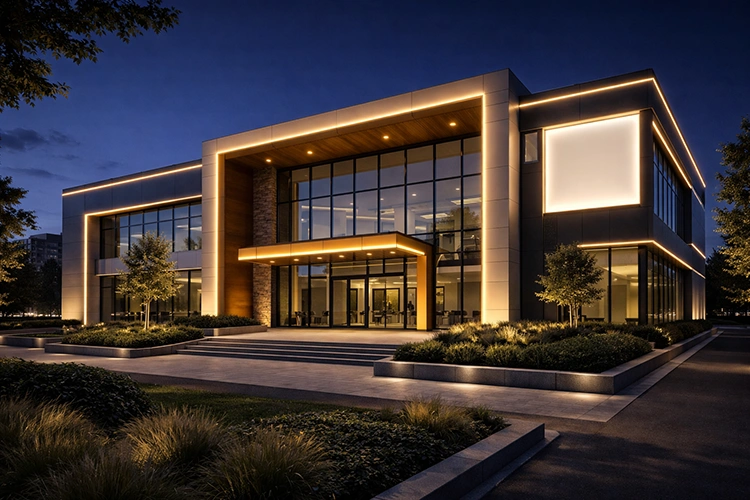
Trend #7: Climate-Ready, Low-Maintenance Exteriors
More owners are choosing finishes that reduce future repainting and patchwork. The trend is to select systems that are:
- Suitable for strong sun exposure
- Better at resisting staining and water marks
- Easier to clean in dusty environments
- Reliable in coastal humidity and monsoon cycles
This focus is driving the rise of modern commercial building elevation strategies built around durability and lifecycle value—not just initial cost.
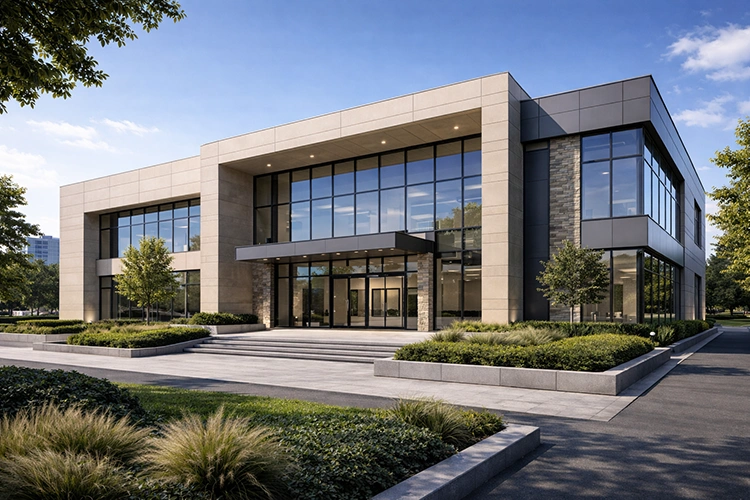
Trend #8: Fast Facade Retrofits for Existing Commercial Buildings
Upgrading old commercial buildings is a big trend for 2026. Many businesses are renovating exteriors to:
- Modernize the look quickly
- Improve trust and walk-ins
- Refresh branding without long shutdowns
A smart retrofit can transform a tired building into a modern identity asset—often faster than repeated plaster repair and repainting cycles.
How to Apply These Trends: Practical Checklist
Before finalizing your exterior, run through this quick guide:
1. Define the building purpose: retail, office, healthcare, hospitality
2. Study the site conditions: heat, dust, coastal humidity, rainfall
3. Pick a style direction: minimalist grid, mixed-material, textured feature zones
4. Plan branding areas early: signage band + entrance highlight
5. Add lighting strategy: night identity without clutter
6. Create a maintenance plan: cleaning access, frequency, and surface selection
When these basics are planned early, the final look appears premium—and stays premium.
MAPL Recommendation: Where ACP Fits 2026 Elevation Trends
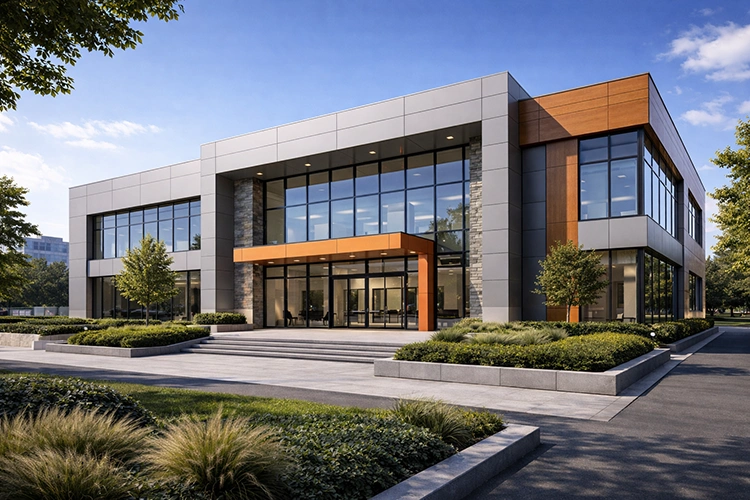
ACP sheets remain a popular choice for commercial buildings because they support clean lines, consistent finishes, and faster execution. For 2026 trends, ACP works especially well for:
- Minimalist grids and crisp joint patterns
- Mixed-material facades with glass/texture accents
- Bold signage bands and entrance portals
- Durable, low-maintenance exterior solutions (grade dependent)
MAPL offers multiple ACP finish series—like the Solid Colors ACP Sheet Series, Corporate ACP Sheet Series, Metallic ACP Sheet Series, and Sparking ACP Sheet Series—along with premium texture options such as the Wooden ACP Sheet Series, Stone Colors ACP Sheet Series, and Marble Premium ACP Sheet Series—so architects and builders can match modern design themes while keeping execution practical.
Conclusion
In 2026, the winning exterior formula is clear: performance + brand identity + low maintenance. The right material choices, clean detailing, and planned lighting can turn a building into a long-term business asset—not just a structure.
If you’re planning a new project or upgrading an existing commercial exterior, MAPL can share shade options and guidance to help you choose a solution that looks premium and performs well in Indian conditions.